 How-to
Organize High-Value Pokémon Singles for Appraisal: A Step-by-Step Guide
Quick Summary
To organize high value pokemon singles for appraisal, protect each card in penny sleeves and top loaders, then build one photo folder and one inventory sheet per card. Record set, number, variant, condition notes and recent sold prices so an appraiser can price the card from your documentation alone.
- Use penny sleeves and top loaders, and never rubber bands or tape on valuable cards.
- Name each photo folder with set abbreviation, card number and variant, such as BS-4-Holo.
- Check condition in order: corners, edges, surface, centering, then holofoil and texture.
- Compare at least three recent sold prices and record the average and the date checked.
- Do not clean, press or edit card photos, since this can lower value or void a grading guarantee.
Table of Contents
- What You'll Need: Supplies for Protecting High-Value Pokémon Singles
- How to Organize High Value Pokémon Singles for Appraisal Online
- How to Organize Pokémon Cards from Different Sets
- Step-by-Step: Assessing Condition and Writing Condition Notes
- Separating Market Value, Asking Price, and Appraisal Value
- How to Check Pokémon Card Value with an App
- How to Appraise Old Pokémon Cards and Avoid Appraisal Scams
- Booking Your Appraisal or Sale with BryanSC
- Frequently Asked Questions
What You'll Need: Supplies for Protecting High-Value Pokémon Singles
Last Updated: November 22, 2026
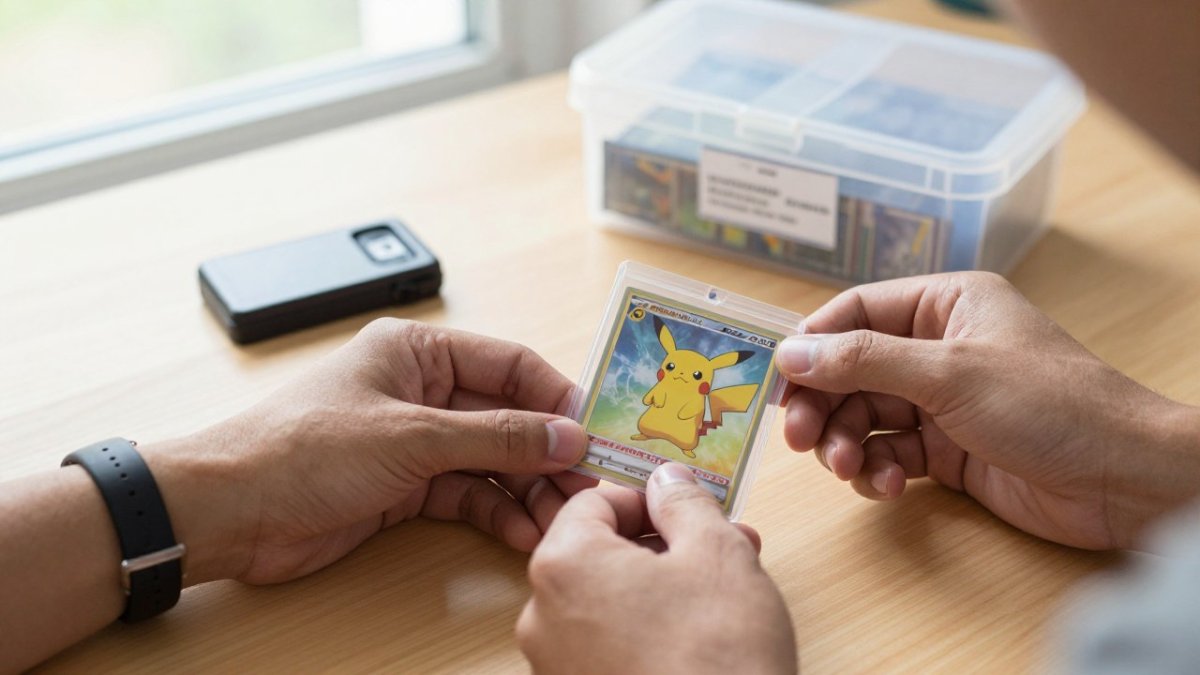
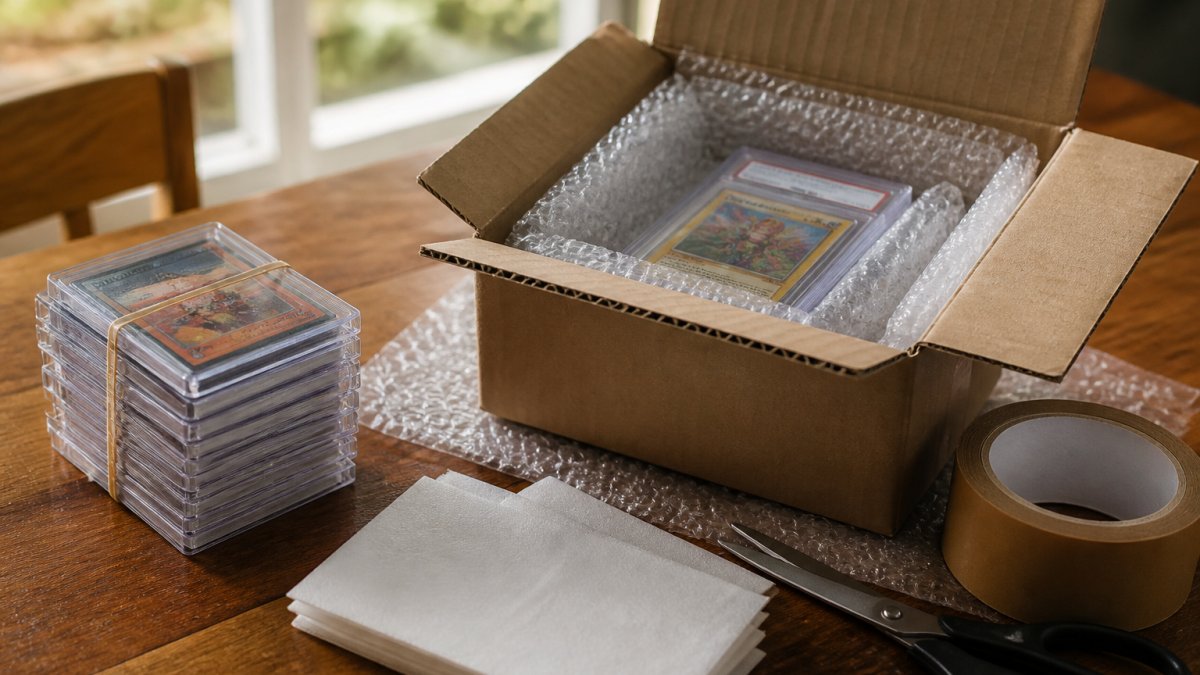
Organizing high value pokemon singles for appraisal starts with the right supplies. Before you touch a card, gather everything you need so each one stays clean, protected and easy to inspect.
Cards worth $10 or more deserve more care than bulk commons. A single scratch or bent corner can lower what an appraiser offers, so protect every card at every step.
Here is what to keep on hand:
- Penny sleeves: Thin inner sleeves that block fingerprints and dust.
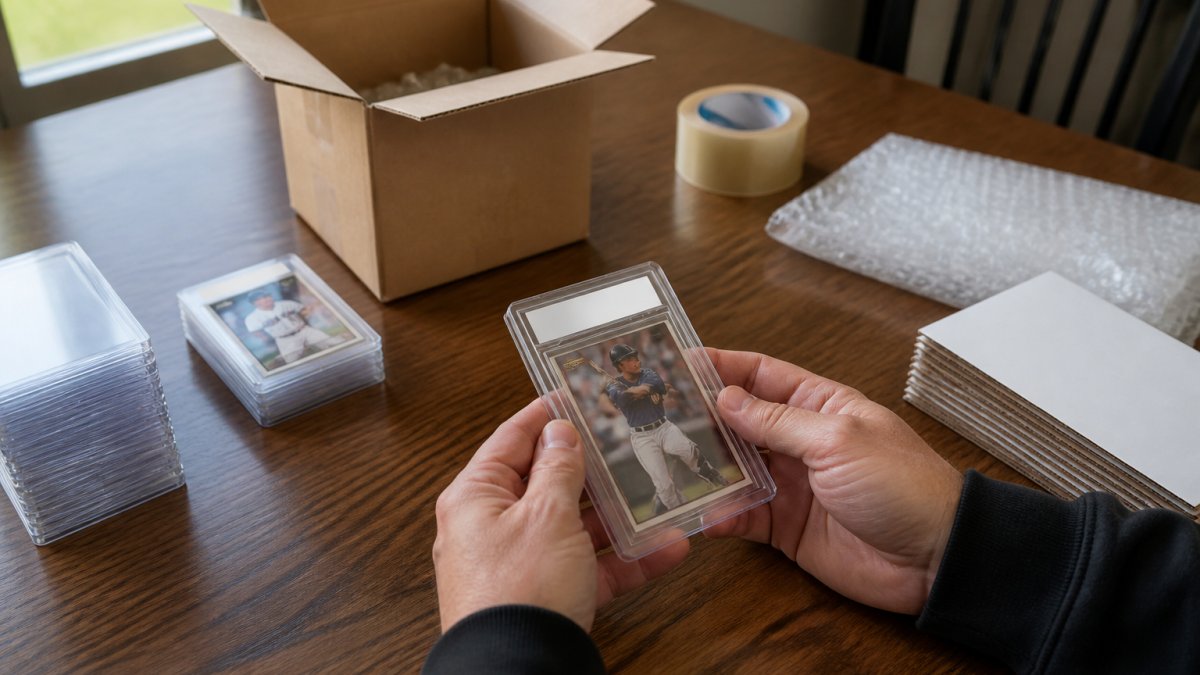
- Top loaders: Rigid plastic holders that prevent bending.
- Soft-edged gloves or a clean microfiber cloth: Keeps oils off the surface.
- Labeled storage box or sorting tray: Holds cards upright and separated.
- Card notebook or spreadsheet: Tracks every card you own.
- Pencil and sticky notes: For marking sets and condition notes.
WATCH OUT: Never use rubber bands or tape on high-value cards. They can leave marks or damage the edges.
Sizes matter, so check that top loaders fit your card type before you order a batch.
How to Organize High Value Pokémon Singles for Appraisal Online
Organizing high value pokemon singles for appraisal online is a documentation job before it is a photography job. A remote appraiser cannot hold the card, so your photos, inventory sheet, and provenance records become the evidence they price from. Build one folder per card and one master inventory sheet that links to every folder.
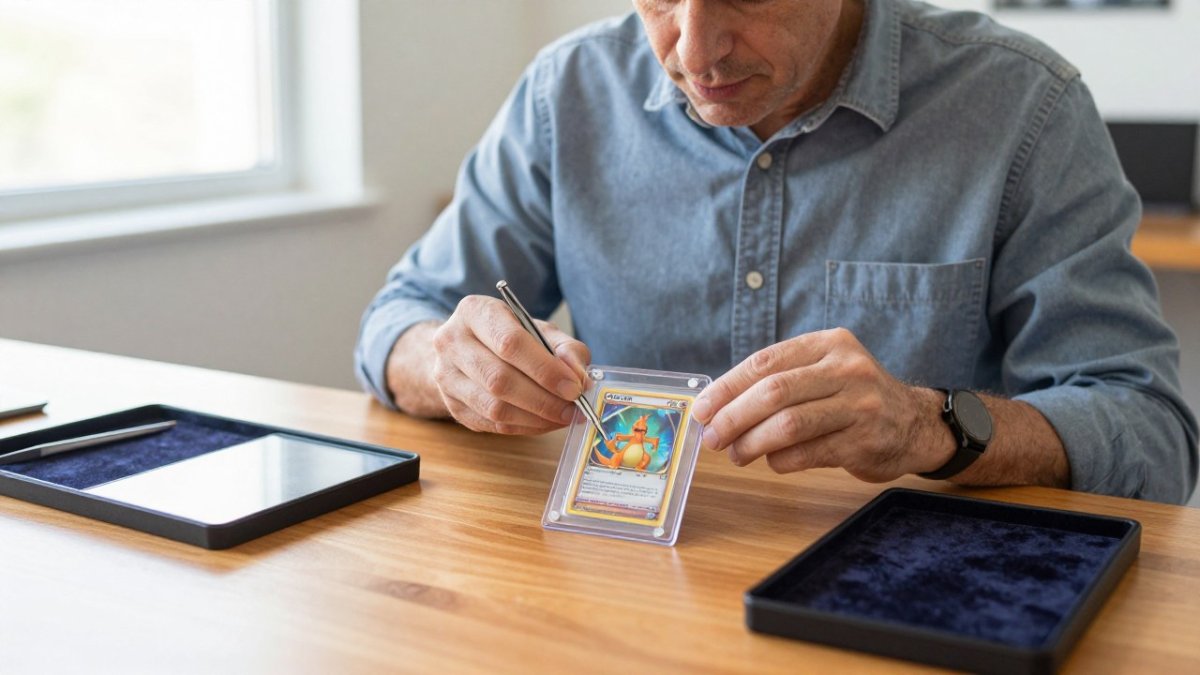
Start with a clean, well-lit spot near a window but out of direct sun. Lay each card flat on a neutral gray or black background, shoot the front and back straight on, and include one angled shot under raking light to reveal surface scratches and print lines. Keep the card in its sleeve or holder for the photo if it is already protected, and note in the inventory whether the photo shows the raw card or the holder.
Use a consistent inventory template so every card carries the same fields. A spreadsheet with these columns works for most collections:
- Card name
- Set name and set number
- Card number and variant (holo, reverse holo, first edition, shadowless, promo)
- Language
- Condition notes (see the condition section below)
- Estimated market value and the date you checked it
- Purchase date, purchase price, and seller or source
- Prior grading or appraisal documents on file
- Photo folder name
Name each folder with the set abbreviation, card number, and variant, such as "BS-4-Holo," so the sheet and the folder match without guesswork. A common pattern is to add a short "notes" column for anything an appraiser should know, such as a known print defect or a prior restoration attempt.
Documentation and provenance matter. Record where and when you acquired the card, keep receipts or order confirmations, and scan any prior grading labels or appraisal letters into the same folder. If a card was graded before, note the grading company, the grade, and the certification number.
Watch out: do not edit or enhance card photos. Color correction, cropping that hides edge wear, or filters can make an appraiser distrust the whole submission and may be treated as a misrepresentation.
Before you send anything, export the inventory sheet to PDF and keep a copy. Remote appraisals often start with that PDF, and a clean, consistent sheet shortens the back-and-forth and reduces the chance that a valuable single gets overlooked in a large submission.
How to Organize Pokémon Cards from Different Sets
Sorting cards by set is the fastest way to find what you own. Many collectors also sort by rarity, so valuable cards stand out right away.
Use this simple system:
- Split your cards into piles by set name.
- Sort each pile by card number, lowest to highest.
- Pull out anything rare or holographic into its own group.
- Store bulk commons separately so they do not mix with your high-value singles.
Keep a separate sorting tray for each set. A labeled box with dividers works well for larger collections.
Step-by-Step: Assessing Condition and Writing Condition Notes
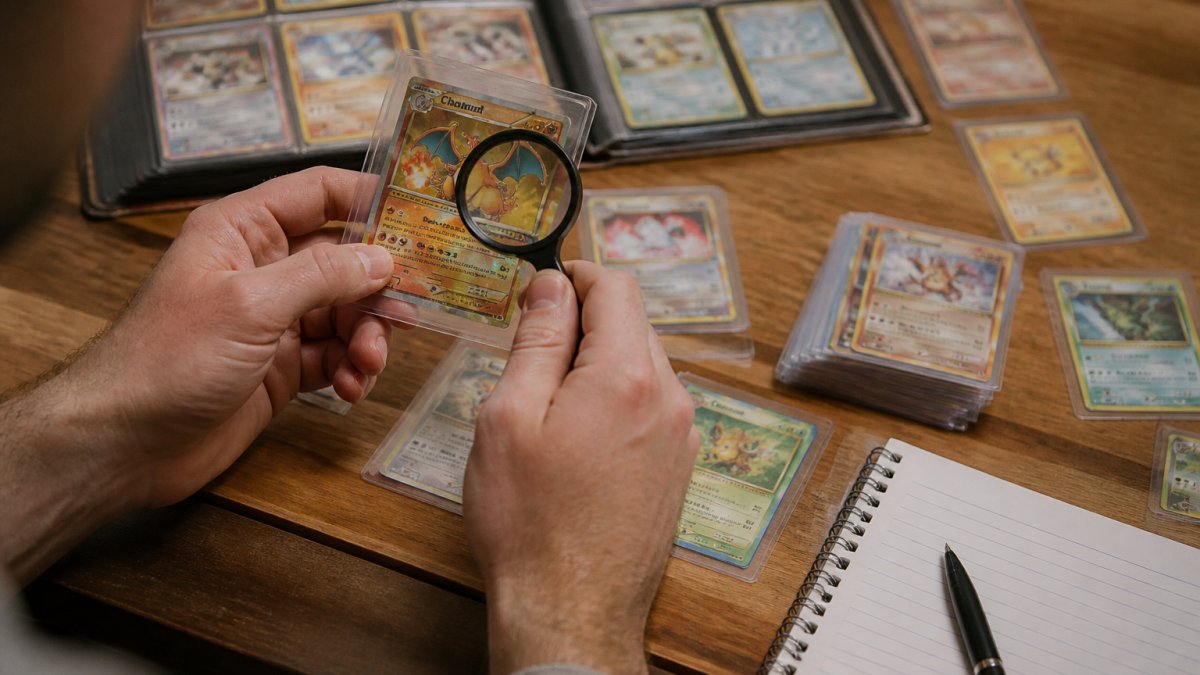
Condition has the largest effect on what an appraiser offers, and the most common mistake is overgrading. Work through each card in the same order every time so your notes stay comparable across the collection.
- Corners. Look for whitening where the colored border meets the cut edge, soft or rounded tips, and any bend that catches light. A single small white nick on one corner is a minor flaw; whitening on three or four corners plus a bend is a major one.
- Edges. Run a fingernail lightly along the edge or tilt the card under light to catch chips, roughness, and edge wear. Note whether wear is on one edge or all four.
- Surface. Tilt the card under a desk lamp to reveal scratches, print lines, indentations, and stains. Hold it at an angle rather than straight on, because many scratches are invisible under flat light.
- Centering. Compare the left and right borders and the top and bottom borders. Describe the ratio in plain terms, such as "left border roughly twice the right," rather than guessing a grade.
- Holofoil and texture. On holo and textured cards, check for scratches in the foil, cloudiness, and print lines that run across the artwork.
Write each flaw in plain words and locate it, for example "light scratch near the lower left corner," "small white nick on top right corner," or "faint vertical print line through the artwork." Honest, specific notes build trust and prevent disputes later. A practical rule most practitioners follow is to describe the card as if the buyer were holding it, not as you hope it grades.
Separate the three numbers that get confused during an appraisal:
- Market value: what similar cards in similar condition have recently sold for.
- Asking price: what you hope to get, which is a negotiating position, not evidence.
- Appraisal value: what an appraiser is willing to pay or estimate after inspecting the card.
Active listings are asking prices, not market value, so do not treat them as confirmed sales. Compare recent sold prices for cards in matching condition, check at least three, and write the average and the date you checked it in your inventory sheet. Appraisal value is often below market value because the buyer needs room to resell.
Can You Grade Cards With Minor Surface Scratches? Cards with light surface scratches are often still worth submitting for grading, but the scratches may lower the grade. Read more about whether minor surface scratches still allow grading. Write the scratch in your condition notes either way so you know what to expect. A common pattern is that centering and corner whitening limit the grade more than a single light surface scratch, so note all flaws rather than only the most visible one.
Watch out: do not clean, press, or attempt to remove scratches or stains before an appraisal. Cleaning can alter the surface and may be treated as restoration, which lowers value and can void a grading guarantee.
The article lists five condition checks, each with a specific thing to look for, so a reader can run through them in order.
| Check | What to look for | Note style |
|---|---|---|
| Corners | Whitening, soft or rounded tips, bends | Minor nick vs. whitening on several corners |
| Edges | Chips, roughness, edge wear | Note whether wear is on one edge or all four |
| Surface | Scratches, print lines, indentations, stains | Tilt under lamp to reveal flaws |
| Centering | Left/right and top/bottom border ratio | Plain terms, e.g. "left border roughly twice the right" |
| Holofoil and texture | Foil scratches, cloudiness, print lines | Check across the artwork |
Separating Market Value, Asking Price, and Appraisal Value
These three numbers are different, and mixing them up leads to confusion.
- Market value: What similar cards have recently sold for.
- Asking price: What you hope to get.
- Appraisal value: What an appraiser is willing to pay or estimate after inspecting the card.
Compare recent sales for your card before you set an asking price. Use a price guide or recent sold listings to find a realistic market value.
Expect the appraisal value to fall below market value. Buyers need room to resell, so they usually offer less.
How to Check Pokémon Card Value with an App
Several apps and online price guides show recent sales for Pokémon cards. Search by card name, set and number to find the right listing.
Check at least three recent sold prices. A single high or low sale can skew the picture. Match the condition of those sales to your card as closely as you can.
Write the average of the sold prices in your inventory sheet, along with the date you checked.
How to Appraise Old Pokémon Cards and Avoid Appraisal Scams
Older cards can carry strong value, so it pays to be careful. Some sellers and buyers use pressure tactics or hidden fees.
Watch for these warning signs:
- Pressure to decide immediately
- Fees charged before any sale
- Offers far above or far below market value without explanation
- Requests to ship cards before you receive a written offer
Many collectors find that a written, itemized offer protects them best. Ask for the offer in writing before you send any card.
Booking Your Appraisal or Sale with BryanSC
BryanSC buys Pokémon singles valued over $10, along with graded Pokémon and sports cards. We prioritize graded inventory and higher-end singles.
Pricing depends on quantity, condition, rarity and current market demand. Visit our website for current buying details and to request a quote.
Once your inventory is ready, sign up to get started and book your appraisal.
Frequently Asked Questions
How do I organize high value Pokémon singles for appraisal online?
Start by sorting each card into its own sleeve and top loader, then photograph the front and back in good light with the card number and set name visible. Create a simple spreadsheet with columns for card name, set, set number, variant, condition notes, and photo file name. Include the rarity and any grading label if the card is graded. Keep the cards in the order listed in your sheet so that the appraiser can match each photo to each line item quickly and accurately.
How do I check Pokémon card value with an app?
Use a price guide or tracking app that lets you search by set and card number, then filter for the matching variant such as holographic or reverse holo. Compare recent sold listings rather than asking prices, since sold prices show what buyers actually paid. Check the card's condition against the price tier you select, because a lightly played copy and a near-mint copy can differ substantially in value. Treat any app estimate as a starting point, not a final appraisal.
How do I appraise old Pokémon cards without getting scammed?
Look for appraisers who explain their fee structure before you send anything, and avoid anyone who asks for an upfront payment to release a valuation. Ask for a written list of what they will assess and how they reached each number. Keep your original inventory sheet and photos so you have a record of your cards before handling. Be cautious of anyone who pressures you to decide quickly or who offers a price far above recent sold listings.
Should I organize Pokémon cards by set, number, or value?
Organize by set first, then by card number within each set, because this matches how price guides and appraisers index cards. Sorting by value afterward helps you decide which cards need the closest attention and which can go in bulk. Keep a separate list of your highest-value singles so they are easy to find and protect. Sorting by set and number keeps your inventory consistent and makes it simpler to verify each card against market data.