 How-to
7 Steps to Submit Sports Cards to PSA Like a Pro
Last Updated: October 25, 2026
Quick Summary
To submit sports cards to PSA, prepare each card in a penny sleeve and semi-rigid holder, complete an online submission form with card details and declared value, package everything securely in a box with padding, and ship via tracked mail with insurance to PSA's address.
- Assess card condition in four areas: corners, edges, surface, and centering before deciding to submit.
- Grading costs depend on service level and declared value, with fees ranging from economy to express tiers.
- Use penny sleeves first, then semi-rigid holders, and never use top loaders or tape directly on cards.
- Include a printed packing list inside the box matching your online submission line for line.
- Ship via tracked mail with signature confirmation and insurance, never in a padded envelope alone.
Table of Contents
- Evaluate Your Cards and Choose Which Ones to Submit
- How to Prepare Cards for PSA Grading
- Understanding PSA Sports Card Grading Cost
- How to Package Cards for PSA Submission
- Complete Your Online Submission and Track Status
- PSA Card Grading Turnaround Time and What to Expect
- Selling Your Graded Sports Cards for Fair Market Value
- Frequently Asked Questions
Evaluate Your Cards and Choose Which Ones to Submit
Before you submit sports cards to PSA, decide which cards are worth grading, not every card deserves the investment.
Heavily played, creased, or stained cards won't benefit: PSA grades 1 to 10, and a clearly damaged card earns a low grade that won't help you sell it.
Assessing card condition and centering
Card condition determines whether grading makes sense. Check four areas: corners, edges, surface, and centering.
Corners should be sharp, not rounded or worn.
Edges should show no whitening or fraying from handling.
Surface quality means checking for scratches, creases, or print defects. Tilt the card under light, creases are permanent damage, so don't submit those cards.
Centering refers to how the image sits on the card. Borders should be roughly equal on all sides; off-center cards receive lower grades, so measure with a ruler if unsure.
Determining grading potential before submission
Ask yourself: will grading increase this card's value? A card worth $15 raw might be worth $40 graded. But grading costs money.
High-value cards almost always benefit: if a card is worth over $50 raw, grading usually makes sense, while lower-value cards might not recover their grading costs.
Look at recent sales of similar cards in raw and graded condition. Check what buyers actually paid.
How to Prepare Cards for PSA Grading
Preparing your cards correctly protects them during shipping and handling. Poor preparation can damage cards in transit.
Cleaning and inspecting for print defects
Never clean a card aggressively. You can cause more damage than it had before. If a card is dusty, use a soft, dry cloth and gentle pressure only.
Inspect for print defects closely. Some are normal for older cards, and some manufacturing errors add rarity value.
Look for these common print defects:
- Ink spots or smudges
- Misaligned colors
- Spots or discoloration
Document any defects so you can note them on your submission form.
Using card sleeves and protective holders
Use a penny sleeve first, a thin plastic sleeve that fits one card and prevents direct contact.
Never use rubber bands, tape, or anything sticky. Don't stack cards directly on top of each other.
For shipping, some collectors add a top loader, a thick plastic sleeve, over the sleeved card for extra security in transit.
Understanding PSA Sports Card Grading Cost
Grading costs depend on service level, declared value, and turnaround time, the higher your card's declared value, the higher your fee. PSA updates its fee schedule periodically, so confirm current rates on the official PSA submission page before you commit.
How PSA's fee structure actually works
PSA prices grading per card, not per submission. Each service level has three moving parts:
- A per-card fee, the base price you pay for each card graded at that level.
- A maximum declared value, the highest value a card can carry and still qualify for that service level. If your card is worth more than the cap, you must move up to a higher service level.
- An estimated turnaround time, the window PSA targets for completing that tier. Faster tiers cost more per card.
Tiers typically ladder from an economy or value tier (lowest per-card fee, longest turnaround) through mid-tier standard to express or premium (higher fees, shorter turnarounds). Exact names, prices, caps, and windows change, so always pull the current schedule from PSA directly.
Service levels and declared-value limits
PSA offers different service levels: standard takes longer but costs less per card, while express is faster and costs more.
Declared value is what you tell PSA your card is worth. This affects your fee. Higher declared values trigger higher fees.
Be realistic: if you declare a card worth $1,000 but it grades lower than expected, you've paid a higher fee for a disappointing result.
A card-by-card grading economics framework
Before you submit, run each card through a simple four-step check, the decision most beginners skip, and where grading budgets quietly disappear.
- Estimate the likely grade. Be honest about corners, edges, surface, and centering. A card with visible wear is unlikely to hit a 9 or 10.
- Look up recent sold prices for that card in raw condition and in the grade you expect. Use actual completed sales, not asking prices.
- Add up your all-in cost per card: the per-card grading fee for your chosen service level, plus your share of shipping to PSA, return shipping, and insurance. Divide your total shipping and insurance cost by the number of cards in the box to get a realistic per-card figure.
- Compare. If (expected graded sale price) minus (all-in cost per card) is not meaningfully better than selling the card raw, grading is a hobby expense, not an investment. Skip it or hold it.
A useful rule of thumb: the expected graded value should be at least roughly double the all-in grading cost before a submission makes sense, because grades come in lower than hoped more often than sellers expect.
Where the money actually goes
The per-card grading fee is only part of your cost. Budget for:
- Outbound shipping to PSA, with tracking and insurance.
- Return shipping and handling from PSA back to you.
- Insurance on both legs, based on your declared values.
On a small submission, shipping and insurance can add a meaningful amount per card, so batching several cards into one shipment usually beats mailing one card at a time.
Pricing depends on quantity, dates, and the service level you select.
PSA official submission and pricing page
PSA grading costs vary by service level and declared value, with each tier offering different per-card fees and turnaround times.
| Service Level | Per-Card Fee | Turnaround Time | Best For |
|---|---|---|---|
| Economy or value tier | Lowest | Longest | Budget-conscious submissions |
| Standard | Mid-range | Several weeks | Most submissions |
| Express or premium | Highest | Fastest | Time-sensitive submissions |
How to Package Cards for PSA Submission
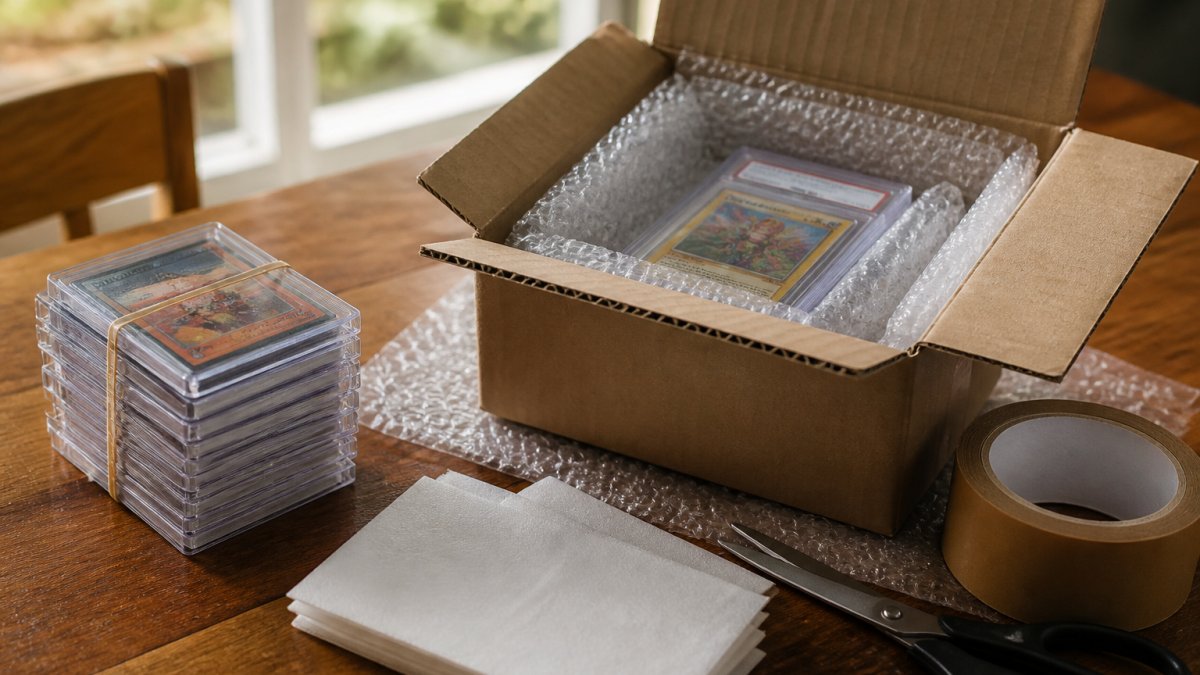
Packaging protects your cards during shipping. Poor packaging can mean damaged cards, lower grades, or rejected claims. Here is a complete, repeatable packing sequence.
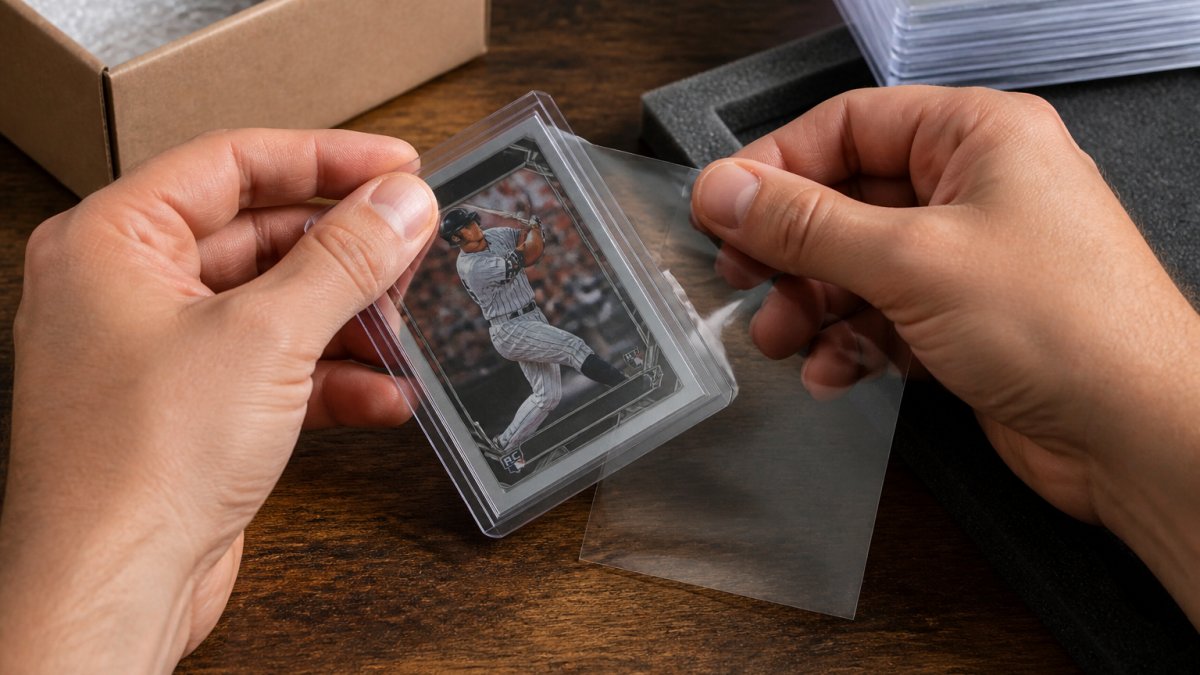
The card-by-card prep sequence
Do this for every card before anything goes in a box:
- Penny sleeve first. Slide each card into its own soft penny sleeve. Never put two cards in one sleeve, they will rub and scratch each other.
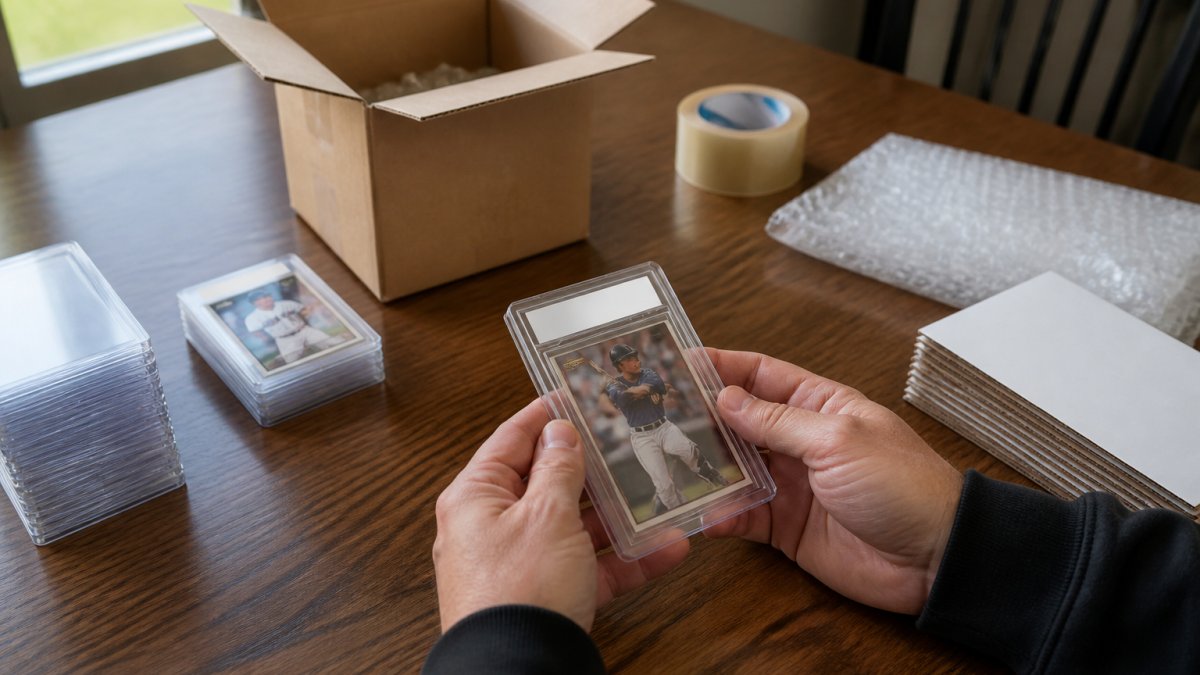
- Semi-rigid holder second. Place the sleeved card into a semi-rigid holder (often called a Card Saver). The card should sit flat with all four corners inside the holder.
- Orientation matters. Insert the card so the top edge is fully seated and the holder's opening is at the bottom, then tape the holder closed with a small piece of painter's tape or a fold of tape on the flap, never tape across the card window.
- No top loaders for PSA submissions. Top loaders are fine for storage, but PSA's submission guidelines call for semi-rigid holders. A card in a rigid top loader can shift and the holder can crack in transit.
- Stack in small bundles. Group cards in counts PSA specifies for your order, wrap each bundle in a team bag or a rubber-band-free sleeve, and keep the stack flat.
Building the shipping box
With each card in a penny sleeve and semi-rigid holder, you now need to protect that holder during shipping.
Use a small cardboard box or padded mailer. Never send cards in a regular envelope, they'll bend or get damaged.
A more protective pattern is the box-in-box method:
- Inner box. Place your bundled cards flat in a small, sturdy box with at least an inch of padding on every side.
- Padding. Fill empty space with bubble wrap, foam peanuts, crinkled paper, or cardboard padding. The cards should not move at all.
- Outer box. Place the sealed inner box inside a slightly larger shipping box, with padding between the two boxes. This absorbs impact if the outer box is dropped.
- Shake test. Shake the box gently. If you hear or feel movement, add more padding and repeat.
Fill empty space with packing materials:
- Bubble wrap
- Foam peanuts
- Crinkled paper
Your card should not move inside the box. Shake the box gently. If you hear or feel movement, add more padding.
Packing list and labeling
Include a printed packing list inside the box that matches your online submission line for line, card year, set, card number, player, declared value, and service level. Place it in a clear plastic sleeve on top of the cards, and write your submission ID on the outside of the box and on the packing list.
Secure packaging and shipping insurance
Use a shipping method with tracking and signature confirmation. USPS Priority Mail, UPS, and FedEx all offer tracked services with insurance add-ons.
Insurance protects you if your package is lost or damaged. Declare the full value on the shipping label and keep the receipt showing the insured amount.
Keep your tracking number to monitor your submission status.
PSA shipping and packaging guidelines
Complete Your Online Submission and Track Status
Once your package is ready, fill out an online submission form on the PSA website telling PSA what cards are inside and what you want them graded.
Filling out the submission form correctly
The form asks for basic information about each card:
- Card year and set
- Card number
- Player or subject name
Be accurate, mistakes can delay grading or result in cards being returned. Double-check everything before submitting.
Include a packing list inside your box that matches your online submission. This helps PSA match your cards to your form.
Common errors include the wrong card set or year, an incorrect card number, a declared value that doesn't match the service level, and missing information.
Monitoring your submission status
After you ship, PSA receives and scans your package into their system. Track your submission online using your tracking number and submission ID.
PSA sends updates as your cards move through the process: they log your package, send cards to graders, then encase and ship them back.
Check your submission status regularly to estimate when your cards will return. Turnaround times vary with demand and the service level you chose.
PSA Card Grading Turnaround Time and What to Expect
Turnaround time depends on your service level and current demand at PSA. During busy seasons, even express service takes longer.
Standard service typically takes several weeks; express is faster but costs more.
Check PSA's website for current estimated turnaround times before you submit, they change with volume.
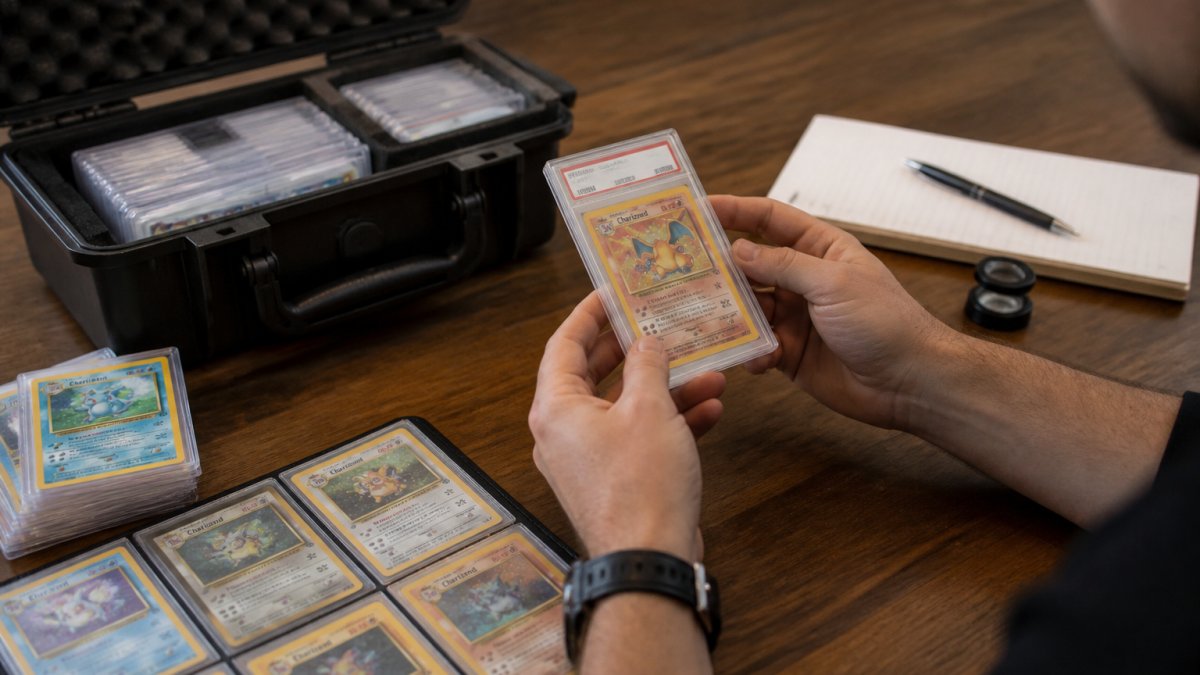
Graded cards return in a protective PSA slab, a plastic case that displays your grade and seals the card from damage.
Selling Your Graded Sports Cards for Fair Market Value
Once your cards are graded and slabbed, you're ready to sell.
Take clear photos of the front, back, and the grade on the slab.
Price your cards based on recent sales of identical cards in the same grade, what they actually sold for, not asking prices.
At bryan sports cards, we buy graded Pokemon and sports cards from collectors like you.
Frequently Asked Questions
How much does it cost to submit sports cards to PSA?
PSA grading fees vary based on the service level you select and the declared value of your cards. Standard service levels range from economy to expedited options, with pricing scaling accordingly. Declared value limits also affect your fee tier. Visit the PSA website for current pricing.
How should you package cards before mailing them to PSA?
Place each card in a penny sleeve first, then insert it into a semi-rigid holder or card saver for rigid protection. Place everything in a sturdy cardboard box with packing materials to prevent shifting. Include a tracking number and consider shipping insurance for high-value cards.
How long does PSA take to grade sports cards?
Turnaround times depend on your selected service level. During peak submission periods, standard timelines may extend. You can track your submission status online using your submission number once your cards arrive at PSA's facility.
Is it worth submitting sports cards to PSA?
Submitting cards to PSA makes sense if your cards have grading potential and resale value that justifies the grading fee. Higher-grade cards (gem mint condition) typically see better resale value. Consider the declared value of each card against the grading cost. First-time submitters should start with cards they believe will grade well to maximize return on investment.
Submitting sports cards to PSA takes planning, but it's straightforward once you understand the process. Evaluate your cards honestly, prepare them carefully, and choose the right service level for your budget. When your graded cards return, you'll have authenticated, protected collectibles ready to sell or keep. Whether you're selling high-end graded inventory or building a collection, proper grading makes a real difference in value and marketability.