 blog
7 Places to Sell Valuable Trading Cards for Top Dollar
Last Updated: October 28, 2026
Quick Summary
You can sell valuable trading cards through online marketplaces, auction houses and consignment, local card shops and dealers, card shows, or specialist buyers. The right channel depends on card value, collection size, and how fast you need cash, so compare net proceeds rather than gross sale price. At bryan sports cards, we buy graded Pokémon and sports cards and Pokémon singles valued over $10.
- Online marketplaces offer the widest audience and highest gross prices, but you do the work.
- Local card shops and dealers provide the fastest path to cash, usually below retail.
- Card shows let you compare multiple offers in one room the same day.
- Pull completed sales, not active listings, and average 5-10 recent comps in the same grade.
- A $600 marketplace sale netting $480 can lose to a $520 dealer offer that nets $520.
Table of Contents
- Where to Sell Valuable Trading Cards: The Main Options
- Local Card Shops, Dealers, and Card Shows
- Where to Sell Graded Cards for the Best Return
- How to Price Trading Cards Before You List Them
- How to Sell a Sports Card Collection: Singles, Bulk, and Sealed
- Sell Pokémon Cards for Cash: What Buyers Actually Pay For
- Net Proceeds, Fraud Prevention, and Safe Shipping
- Get a Quote Before You Ship Your Cards
- Frequently Asked Questions
Where to Sell Valuable Trading Cards: The Main Options
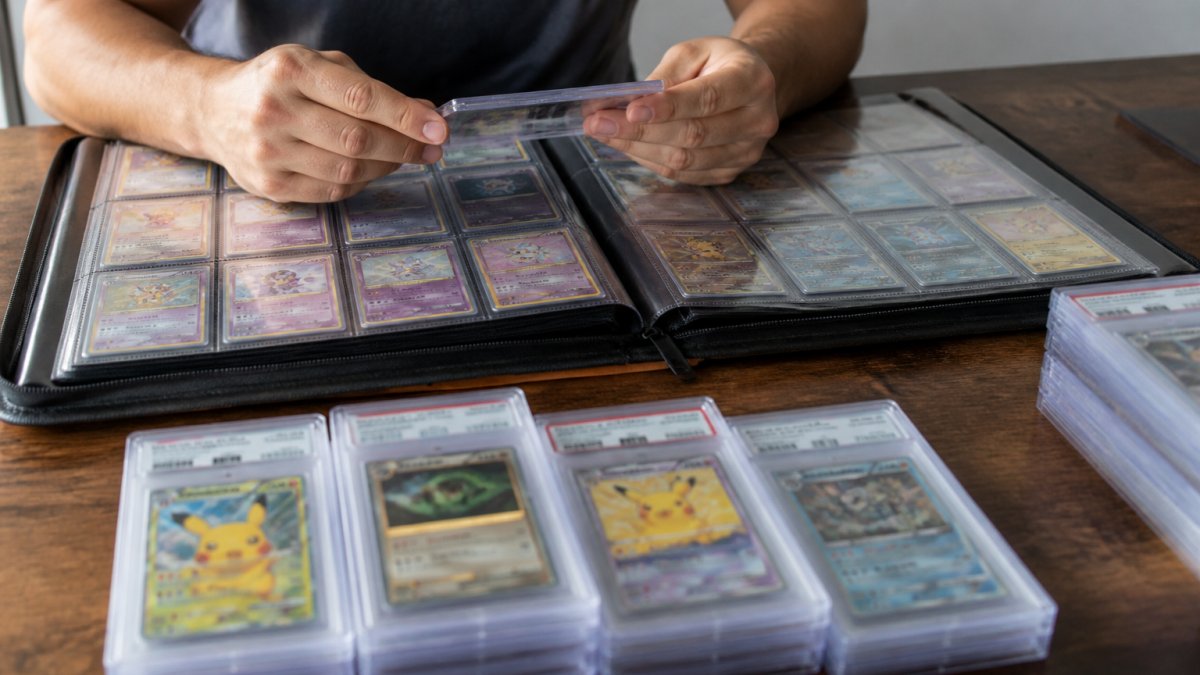
If you're wondering where to sell valuable trading cards, the honest answer is that no single channel wins every time. At bryan sports cards, we buy graded Pokémon and sports cards and higher-end singles.
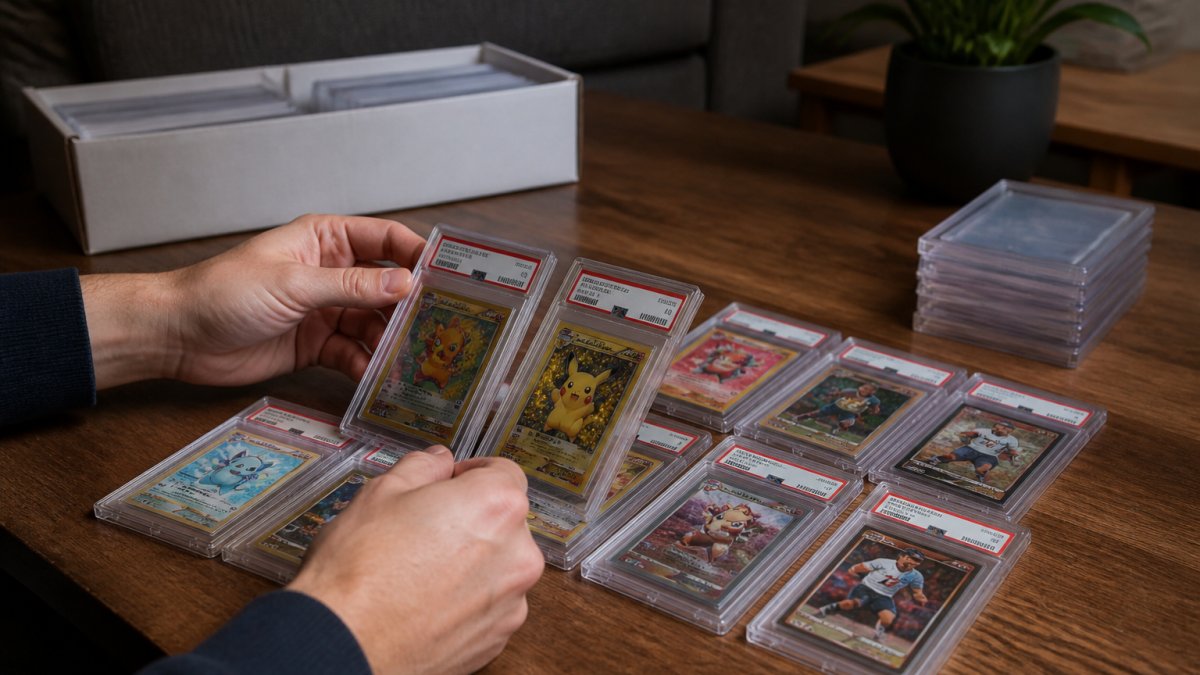
Online Marketplaces and Selling Platforms
Online marketplaces give you the widest audience and the highest gross prices, but you do the work. You photograph, list, answer questions, ship, and absorb fees and returns. A common mistake is listing a raw card as "mint" without close-up photos of corners and edges. Buyers dispute those listings, and platforms side with them more often than sellers expect.
Auction Houses and Consignment
Auction houses and consignment services handle the marketing, authentication, and bidding for you, in exchange for a seller's commission. Consignment is the strongest fit for genuinely rare cards where competitive bidding can push the final price above what a single buyer would offer.
Here is how the main selling channels compare on audience, effort, and speed to cash.
| Channel | Best for | Key difference |
|---|---|---|
| Online marketplaces | Patient sellers with graded cards or clear singles | Widest audience and highest gross prices, but you do the work |
| Auction houses and consignment | Genuinely rare cards | Competitive bidding can beat a single buyer; payouts arrive weeks later |
| Local card shops and dealers | Fastest path to cash | On-the-spot cash offer, usually below retail |
| Card shows | Comparing multiple offers same day | Multiple buyers in one room, no shipping risk or platform fees |
| Specialist buyers | High-end graded cards | Direct quote often nets more after fees and shipping insurance |
Local Card Shops, Dealers, and Card Shows
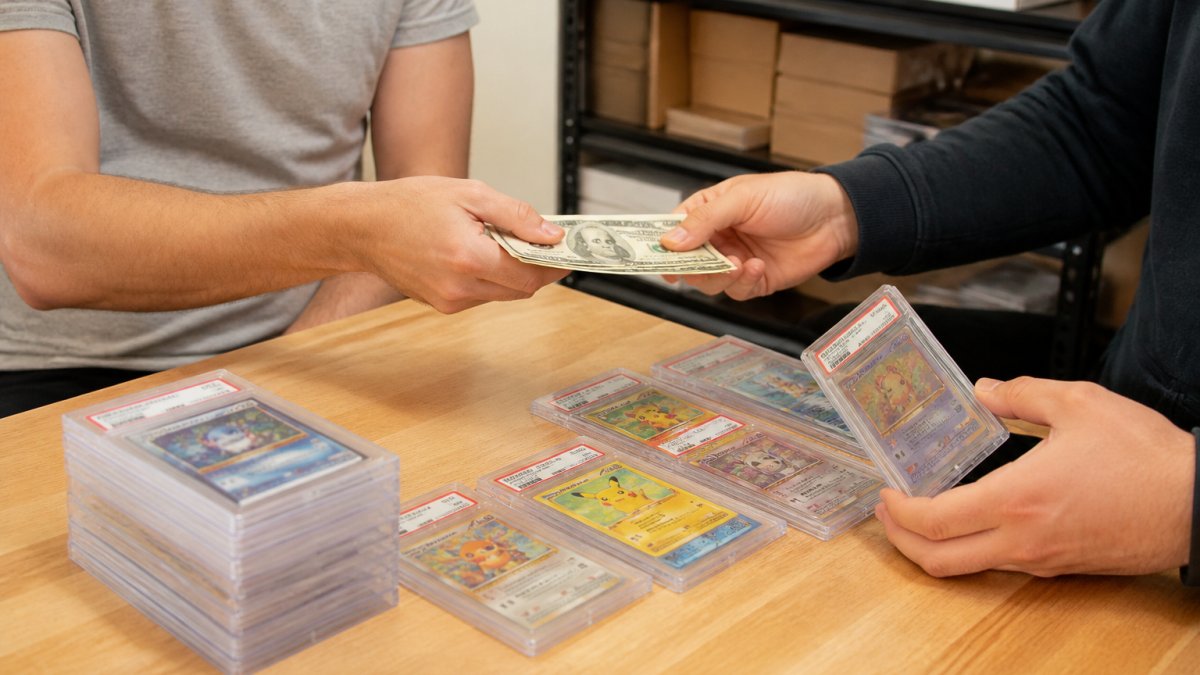
Selling locally is the fastest path to cash and the easiest to verify in person. A local card shop or dealer will inspect your cards on the spot and make a cash offer, usually below retail because the dealer carries the resale risk. Card shows concentrate multiple buyers in one room, which gives you use to compare offers the same day.
Where to Sell Graded Cards for the Best Return
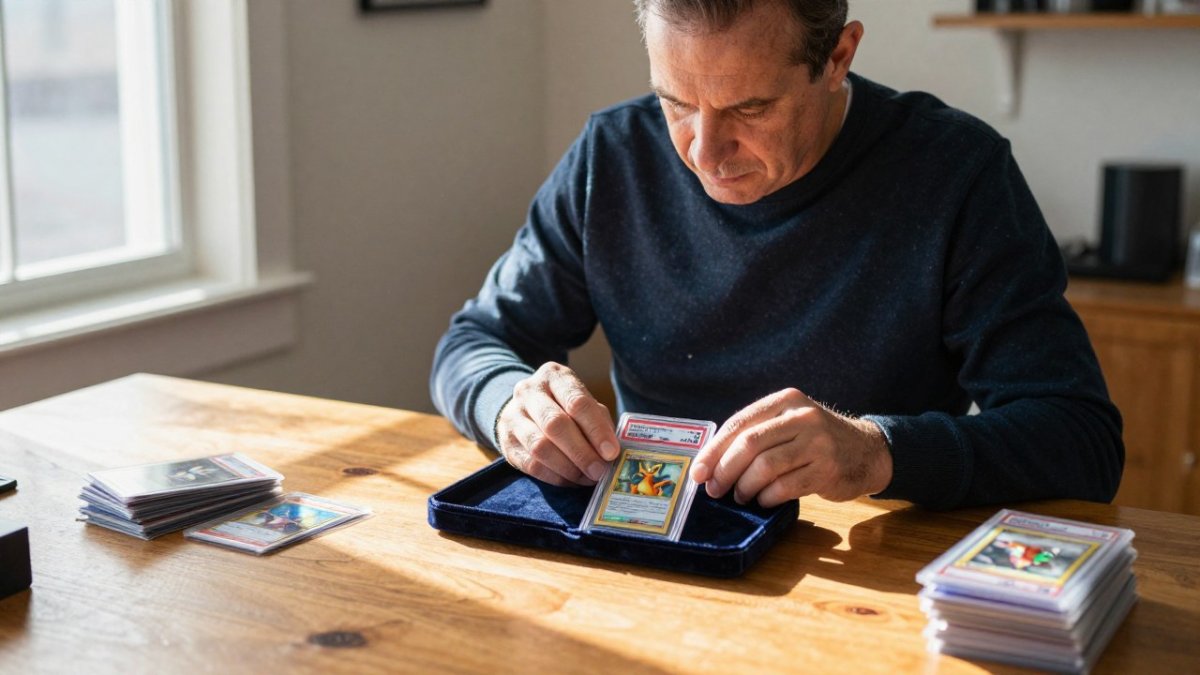
Graded cards sell best where buyers trust the grade and can verify the certification number. Marketplaces with completed-sales history, established auction houses, and specialist buyers that prioritize graded inventory all compete for PSA and BGS slabs. Before you list, confirm the slab is undamaged and the certification lookup matches the card.
How to Price Trading Cards Before You List Them
Pricing is research, not guesswork, and the sellers who get burned are the ones who anchor to asking prices instead of realized sales. Here is the workflow that produces a defensible number.
Step 1: Identify the exact card, not the player
A card's value is set by a specific combination: year, set, card number, parallel or refractor, print run, grade, and serial number if numbered. A 2018 base rookie and a 2018 refractor rookie of the same player can differ by an order of magnitude. Write down the full identifier before you search anything.
Step 2: Pull completed sales, not active listings
On marketplaces, filter by Sold Items and sort by most recent. On auction platforms, pull the realized price from the auction archive. Discard any listing that shows a best-offer accepted without a visible price, and discard outliers in both directions, a single panic sale or a bidding war between two collectors is not the market.
Step 3: Verify the grade and certification
If the card is slabbed, run the certification number through the grading company's public lookup tool (PSA, BGS, CGC, and SGC all offer one). Confirm the label matches the card, the grade, and the population report. A mismatched label or a cracked case is a red flag that will either kill the sale or invite a return.
Step 4: Adjust for condition on raw cards
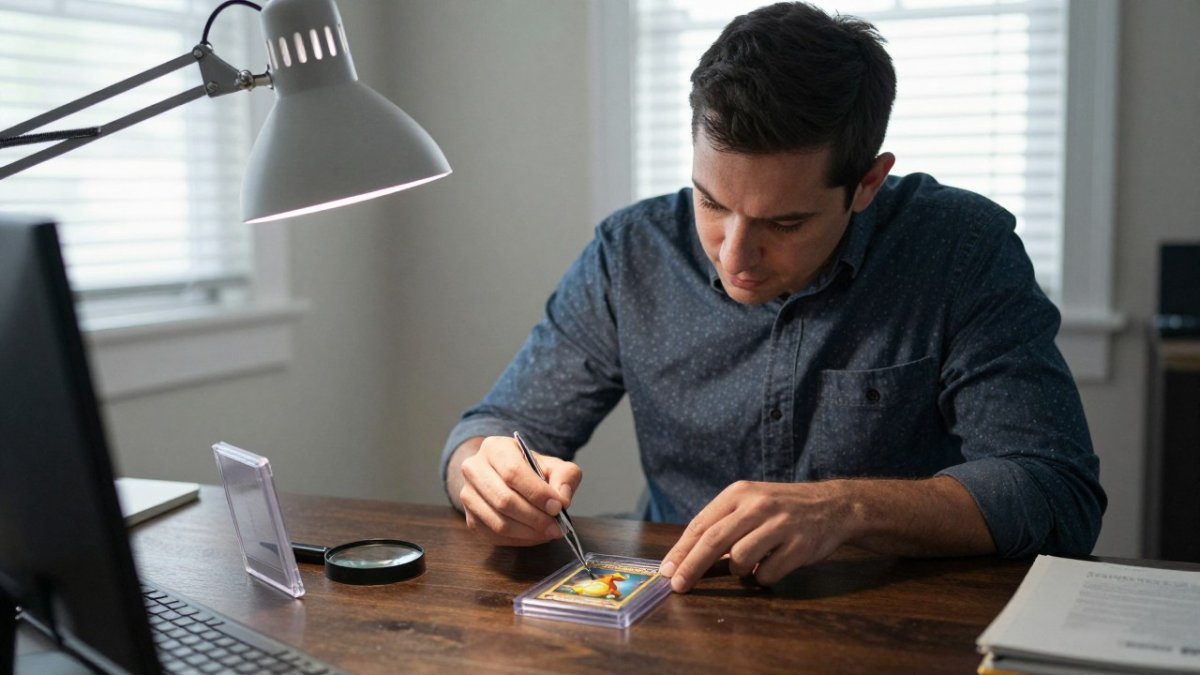
Raw cards are priced on centering, corners, edges, and surface. Buyers discount aggressively for visible whitening on corners, off-center borders, print lines, and surface scratches. If a raw card looks like a strong candidate for a high grade, it can be worth submitting for grading before selling, but only when the expected grade premium exceeds the grading fee plus shipping and insurance both ways.
Step 5: Set a price with a margin for negotiation
Price graded singles near the midpoint of recent comps and leave room for offers. Price raw cards conservatively, buyers assume the worst on condition, and a conservative price with sharp photos attracts more serious buyers than an optimistic price with a long wait. Understanding these market fluctuations remains essential for anyone buying graded cards who wants to navigate the current landscape of collector demand.
When to skip pricing research entirely
If you are selling an entire collection or a large bulk lot, per-card research is not worth the time. In that case, price the collection as a lot based on the aggregate of the top 10-20 cards plus a bulk rate for the rest, and expect a dealer or collection buyer to discount the whole thing for resale risk and handling time.
How to Sell a Sports Card Collection: Singles, Bulk, and Sealed
How you split a collection determines your return. Sell star rookie cards and rare inserts individually to capture full value. Group common cards into bulk lots, where buyers pay for volume rather than per card. Keep factory-sealed boxes and cases sealed; opening them destroys most of their premium. A practical split:
- Singles: list or quote individually, especially graded and rookie cards
- Bulk: sell as lots by set, year, or player
- Sealed: sell sealed boxes and cases as-is, never opened
Selling a Single Card vs. an Entire Collection
A single valuable card is worth the effort of individual listing or a targeted quote. An entire collection is a volume problem: the time cost of listing hundreds of cards usually exceeds the extra money you'd earn. For full collections, a single buyer who purchases the whole lot is often the smarter move, even at a lower per-card price.
Sell Pokémon Cards for Cash: What Buyers Actually Pay For
Buyers pay for condition, rarity, and proof of authenticity. If you want to sell Pokémon cards for cash, focus on what moves the number: graded slabs, sought-after singles, and clean raw cards with sharp photos. Most buyers pass on heavily played cards and bulk commons. Know what you hold before you accept an offer, and get a quote before shipping anything.
Net Proceeds, Fraud Prevention, and Safe Shipping
Your real return is the sale price minus fees, shipping, insurance, and any taxes you owe on the gain. Most sellers focus on the gross number and are surprised by what actually lands in their account. This section walks through the take-home math, the fraud patterns that cost sellers the most, and the shipping mechanics that protect high-value cards.
Estimating net proceeds before you choose a channel
Every channel takes a bite, but the bites are different shapes. A rough framework:
- Online marketplace: expect a final-value fee in the low-to-mid teens as a percentage of the sale price, plus payment processing, plus outbound shipping and insurance, plus the risk of a return. On a $500 card, that can easily leave you with 75-85% of the sale price before taxes.
- Auction house or consignment: expect a seller's commission that varies widely by house and by lot value, plus possible photography, cataloging, and insurance charges. The trade-off is that competitive bidding can push the hammer price above what a single buyer would pay, so the net can still win on genuinely rare cards.
- Local dealer or specialist buyer: the offer is already net, no platform fee, no shipping, no return risk, but the offer is typically below retail because the buyer carries resale risk. Compare the dealer's net offer against the marketplace's gross price minus fees, shipping, insurance, and your time.
Taxes on collectible gains
Collectibles are not taxed like ordinary investments. Gains on collectible sales can be subject to a higher federal rate than long-term capital gains on securities, and state rules vary. Keep records of what you paid, what you sold for, and the dates of both. If you are selling a collection you inherited, the cost basis rules are different again.
Fraud patterns that cost card sellers the most
The two most common attacks are chargebacks and "item not as described" claims. Both work the same way: the buyer receives the card, then disputes the payment or claims the card arrived damaged, altered, or not as listed. Platforms tend to side with buyers unless the seller has documentation.
Defenses that actually work:
- Photograph everything before shipping. Full-card front and back, the slab or holder, the certification label, and the packaging before the box is sealed. Timestamped photos are stronger than undated ones.
- Use tracked, insured shipping with signature confirmation on high-value cards. Signature confirmation removes the "never arrived" defense.
- Document the grade and certification number in the listing and in the shipment record so a swap claim is easy to disprove.
Shipping and packaging high-value cards
The goal is to survive a drop, a crush, and a sorting machine. A practical packing sequence for a valuable single:
- Put the card in a penny sleeve, then a rigid top loader or Card Saver, then tape the top of the holder closed.
- Sandwich the holder between two pieces of rigid cardboard cut slightly larger than the holder.
- Wrap the sandwich in bubble wrap so it cannot shift inside the box.
- Use a new corrugated box, not a padded envelope, for anything above a few hundred dollars.
- Add signature confirmation and full insurance for the declared value.
- Keep the tracking number and the insurance receipt until the transaction is fully closed.
For graded slabs, add extra corner protection and never ship a slab loose in a box. For multi-card orders, ship each card individually protected and then bundle, do not stack raw cards against each other.
The bottom line on net proceeds
Before you commit to a channel, run the math on the specific card: gross price, minus fees, minus shipping and insurance, minus your time, minus the risk of a return or dispute. The channel with the highest gross price is frequently not the channel with the highest net. That is the calculation most sellers skip, and it is the one that decides what you actually keep.
Get a Quote Before You Ship Your Cards
The safest way to sell valuable trading cards is to know your number before anything leaves your possession. At bryan sports cards, we buy graded Pokémon and sports cards and Pokémon singles valued over $10.
Frequently Asked Questions
Should I sell valuable trading cards to a dealer or online?
It depends on how much work you want to do. Selling directly online usually nets more per card but means photographing, listing, shipping, and handling buyer disputes yourself. A dealer or specialized buyer pays less than retail but buys outright, often the same day. For a handful of high-value graded cards, an online marketplace can be worth the effort. For a whole collection or cards you need cash for quickly, an outright buyer removes the hassle and the risk of chargebacks.
How do I price a valuable trading card before selling it?
Start with completed listings, not asking prices. Search the exact card, grade, and cert number on marketplace sold filters and auction archives, then average the last several sales. Raw cards sell for less than graded copies of the same card, and condition drives most of the gap.
Do buyers purchase raw Pokémon cards, or only graded ones?
Graded cards are easier to price because the grade and cert number remove most condition guesswork.
What happens if my cards are lost or damaged in transit?
Ask the buyer who insures the shipment before you send anything. Reputable buyers provide shipping instructions, insured labels, or clear terms stating who carries the risk until delivery. For cards worth $500 or more, ship with signature confirmation and full declared value insurance, and photograph the cards and packaging before sealing the box. Keep the receipt and tracking number until payment clears.
Ready to turn cards into cash without the guesswork? Get started with bryan sports cards, request a quote on your graded cards and high-end singles, and sell with a buyer who tells you the number up front.